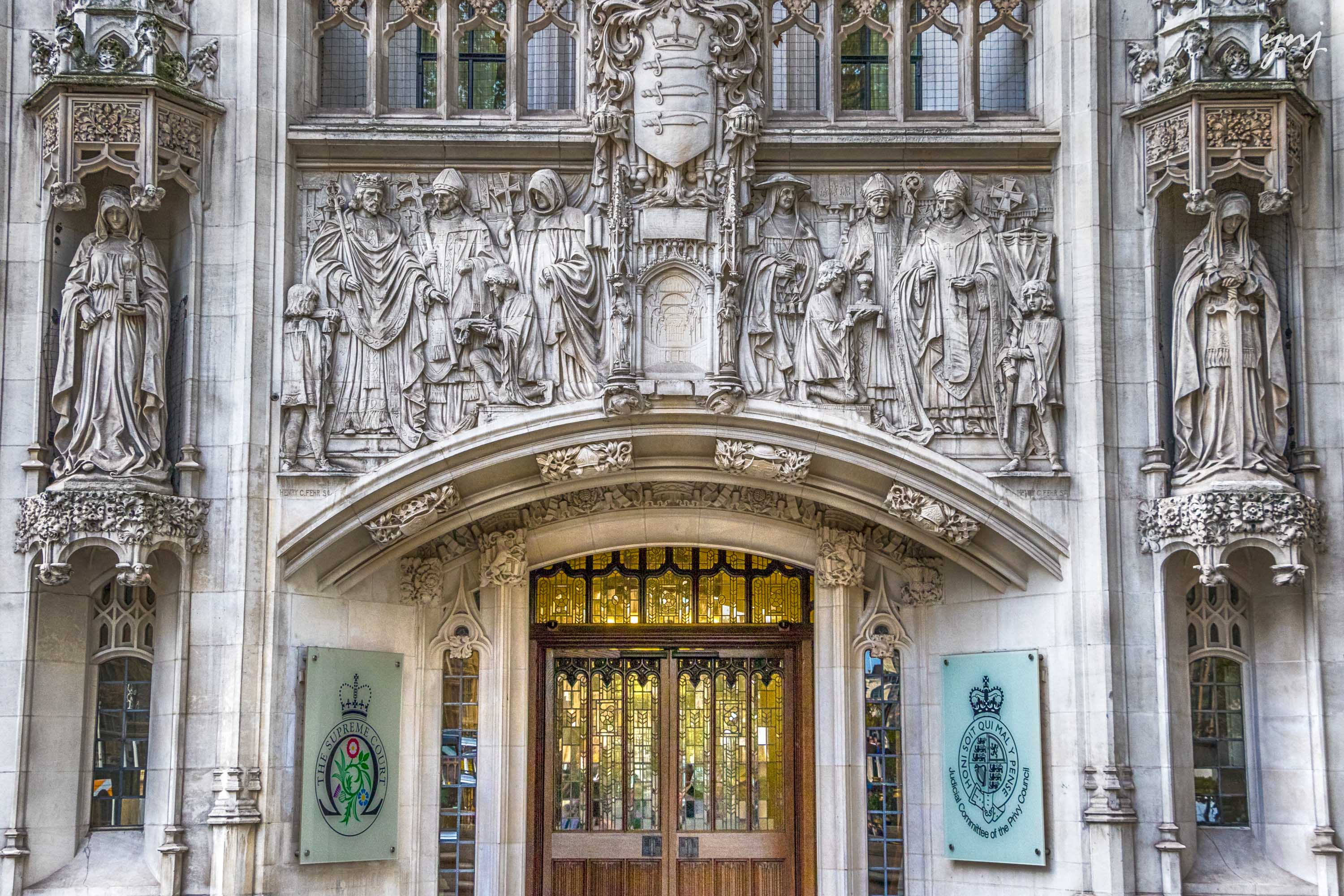
The Supreme Court on 16 September 2024 expounded on the test for determining whether a contract of service is an employment contract, but remitted the matter to the First-tier Tribunal for further consideration in Commissioners for His Majesty’s Revenue and Customs v Professional Game Match Officials Ltd.
The issue between the appellant PGMOL and the respondent HMRC was whether part-time football referees supplied by PGMOL for English league matches were employees of PGMOL such that income tax and National Insurance should be deducted from their compensation. PGMOL provides referees and other match officials for football competitions including the Premier League, FA Cup, and English Football League. This case concerned part-time referees, who officiate in their spare time and usually have other full-time jobs.
The system worked like this. PGMOL offered match appointments to a referee through an online portal. If a referee accepted an appointment, a contract was formed under which the referee agreed to officiate that match and submit a match report, and PGMOL agreed to pay the referee the applicable fee. Either side could cancel the appointment without penalty at any time before the referee arrived at the match ground.
The appeal to the Supreme Court was limited to two issues related to the match appointment contracts: was there a mutuality of obligation between PGMOL and the part-time referees, and did PGMOL have a sufficient degree of control over the referees to establish an employment contract. However, Lord Richards, writing for the panel including Lord Hodge, Lord Leggatt, Lord Stephens, and Lady Rose, took the opportunity to explore the broader inquiry into the existence of employment contracts, making this judgment likely to be a leading authority in the area going forward.
The Court started with the seminal employment law decision in Ready Mixed Concrete (South East) Ltd v Minister of Pensions and National Insurance [1968] 2 QB 497, which set out the following conditions for establishing an employment contract:
- The employee agrees that, in consideration of a wage or other remuneration, he will provide his own work and skill in the performance of some service for the employer. This element is usually termed mutuality of obligation.
- The employee agrees that in the performance of that service, he will be subject to the employer’s control to a sufficient degree to make the latter his employer. This element is usually termed sufficient degree of control.
- The other provisions of the contract are consistent with it being an employment contract.
While reiterating the continued applicability of this test, Lord Richards noted two ways in which courts have strayed from its orthodoxy. First, many of the authorities focused too much on mutuality of obligation and sufficient control, to the exclusion of the effect of the entire contract and the circumstances of the relationship as a whole. Second, even if sufficient control is found, the extent of that control is still relevant to determining the overall question of whether an employment contract exists.
Turning to PGMOL’s part-time referees, the Court found that the individual match engagements satisfied the mutuality of obligation condition. Once a referee accepted a match appointment, a contract under which the referee agreed to provide personal service for payment by PGMOL came into existence. Even though either party was free to cancel the engagement without penalty at any time before the referee arrived at the ground, the required mutuality existed co-extensively with the contract. The right to terminate did not change that conclusion, but “the nature and extent of the mutual obligations are relevant to determining whether the contract is one of employment” when assessing the third stage of the test.
On the sufficient control condition, Lord Richards acknowledged that the test can be difficult to apply when the nature of the services provided leaves little room for intervention by the potential employer. Here, as with employees like surgeons, vessel masters, or research scientists, PGMOL as an employer would have little or no control over the referee’s performance of their actual tasks during a match. But, the Court noted, there is no requirement that an employer must be able to intervene in every aspect of the employee’s duties: “the requirement for control extends only so far as there is scope for it”. So long as some element of control existed, “if only in incidental or collateral matters”, the condition could be met.
Further, the Court said, control for this purpose can take many forms and is not limited to giving direct instructions to the employee. Lord Richards agreed with the Court of Appeal that “the combination of contractual obligations imposed on referees as to their conduct generally during an engagement from the time that a match was accepted to the submission of the match report, and as to their conduct during a match, was capable of giving PGMOL a framework of control sufficient for the purposes of meeting the control test for employment purposes”. The Court added that the existence of sanctions that PGMOL could apply against a referee post-engagement were also of some significance as they played some role in PGMOL’s control.
Accordingly, PGMOL’s appeal on the mutuality of obligation and sufficient control conditions was dismissed. As to disposition, while the Court found it could conclude that those two conditions were satisfied with respect to the referees, no tribunal below had considered the relationship as a whole and all other relevant terms of the contracts. The Court remitted the matter back to the First-tier Tribunal to undertake that inquiry, on the basis that mutuality of obligation and sufficient control were established, but that the nature of the obligations and the degree of control must be taken into account in reaching a final decision.
At the Supreme Court, PGMOL was represented by Jonathan Peacock KC of 11 New Square, Georgia Hicks and Harry Sheenan, both of Devereux Chambers, and McCormicks Solicitors in Harrogate. HMRC was represented by Akash Nawbatt KC and Sebastian Purnell, both of Devereux Chambers, and the HMRC Solicitor’s Office. The neutral citation is [2024] UKSC 29.