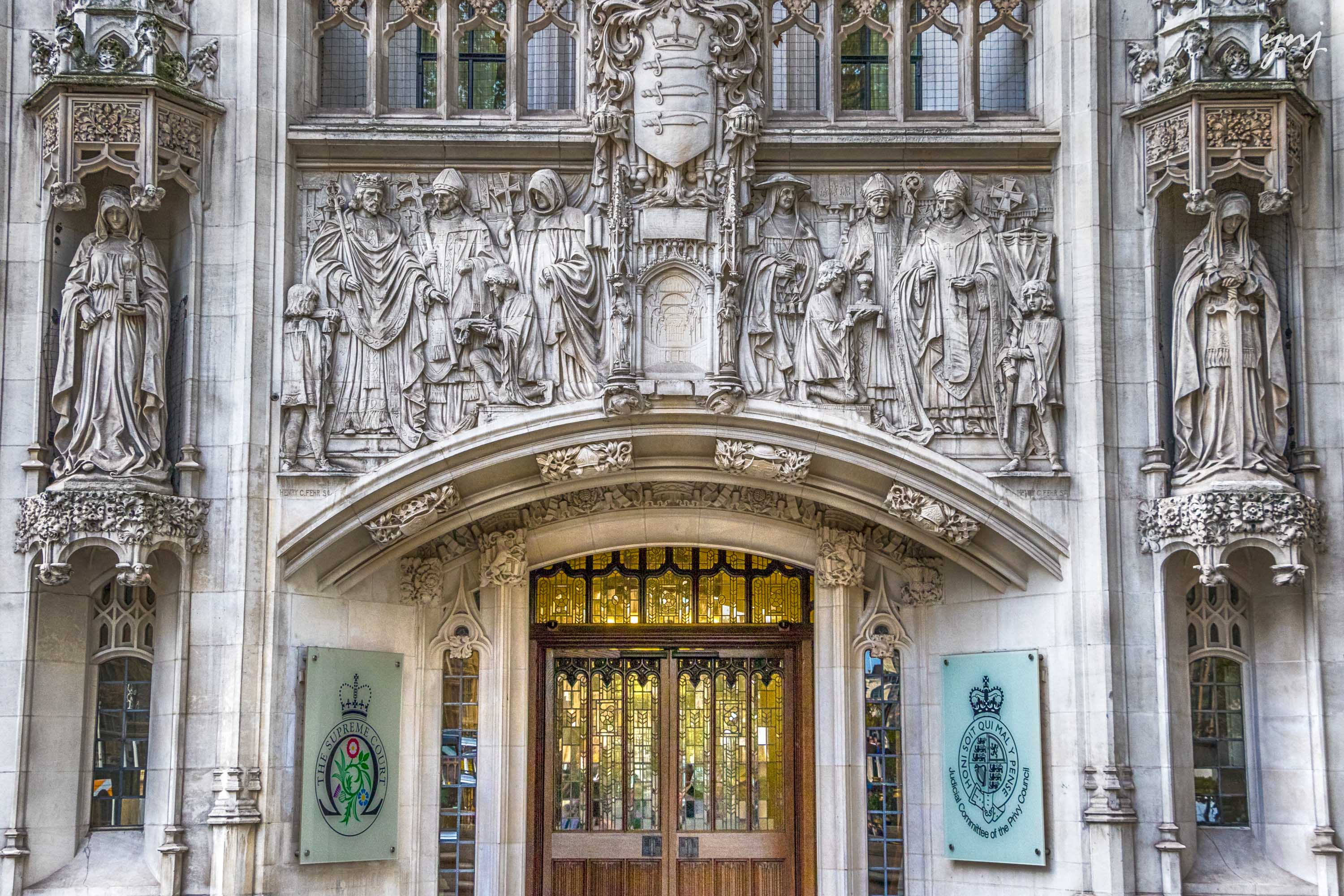
In Oakwood Solicitors Ltd v Menzies, released on 23 October 2024, the Supreme Court found that the respondent solicitors’ deduction of monies from settlement funds on account of their fees did not constitute a payment of their bill under section 70(4) of the Solicitors Act 1974 so as to bar an assessment more than 12 months after delivery.
The respondent solicitors had acted for the appellant client in a personal injury action on a conditional fee arrangement. Their agreement provided that the solicitors’ fees could be paid “out of your compensation” and that from any compensation received “you agree to let us take the balance of the basic charges; success fee; insurance premium; our remaining disbursements; VAT”. The case settled and settlement funds were paid to the solicitors. They used those funds to pay their fees, and sent the balance to the client with a final bill stating that the total charge had been deducted from the damages received.
A little under two years later, the client made an application for an assessment of the bill under section 70 of the Act. But section 70(4) provides that no assessment can be ordered if an application is made after 12 months from payment. The Costs Judge reluctantly agreed that payment had occurred, but said that if he had jurisdiction to do so he would have ordered an assessment given his criticisms of the “impenetrable” billing.
On appeal to the High Court, the client was successful. The judge there found there had been “no sufficient settlement of account” to treat the solicitors’ deduction from the funds as a payment within the meaning of section 70(4). But on the solicitors’ subsequent appeal, the Court of Appeal went the other way, relying on the provisions in the conditional fee agreement as a sufficient agreement by the client for the solicitors to retain the funds as payment.
Before the Supreme Court, the parties’ respective positions boiled down to whether payment under section 70(4) requires the client’s agreement to a particular sum of money after receiving a bill, or whether prospective agreement that a bill can be paid from funds held by the solicitors, together with communication of the deduction to the client, is sufficient.
Lord Hamblen wrote the judgment, joined by Lord Briggs, Lord Sales, Lord Leggatt, and Lord Richards. He started by noting that the most “obvious example” of payment is when a solicitor renders a bill and the client transfers money to pay it. But on the solicitors’ argument, payment was triggered when the final bill was delivered to the client. Lord Hamblen said that does not correspond with the natural meaning of payment unless there has been an agreement on the amount to be paid.
The Court considered that the statutory context further supported the client’s position. The provisions of section 70 focus on the importance of delivery of the bill and the client’s opportunity to review the details before deciding whether to accept the bill or seek an assessment. The Court also noted that given the modern prevalence of retainer agreements, the client protections found in section 70 would be undermined if delivery of a bill informing a client of payment by deduction could constitute payment so as to start the clock ticking on the absolute bar to assessment, before the client has had an opportunity to review the bill.
Finally, Lord Hamblen traced the history of the antecedent legislation and various older authorities interpreting the former statutes. Those cases show, he said, a “long established understanding as to what payment by deduction or retention requires in this context” which is “an agreement to the sum taken or to be taken by way of payment of the bill of costs”.
Based on the ordinary meaning, statutory context, and authorities, the Court agreed with the appellant client that ‘payment’ under section 70(4) requires the client to have provided agreement to the specific amount to be paid. The Court allowed the appeal and restored the High Court’s order for an assessment to take place.
Solicitors who regularly pay their fees by deducting or retaining client monies should consider how this clarification in the law impacts their exposure to assessment applications more than 12 months after delivery of their bills. The Court tried to address practical problems raised by the solicitors’ counsel in this case, including by noting that lawyers can have a prospective agreement for payment by deduction or retention by reference to a fixed fee (in full or in part) or a mathematical formula, while also allowing that a client’s agreement to the amount paid can be inferred from their conduct, including acceptance of any balance.
At the Supreme Court, the appellant was represented by Roger Mallalieu KC of 4 New Square Chambers, Gemma McGungle of 18 St John Street Chambers, and JG Solicitors Ltd in Leeds. The respondent solicitors were represented by Craig Ralph and Erica Bedford, both of Kings Chambers, and Oakwood Solicitors Ltd in Leeds. The neutral citation is [2024] UKSC 34.